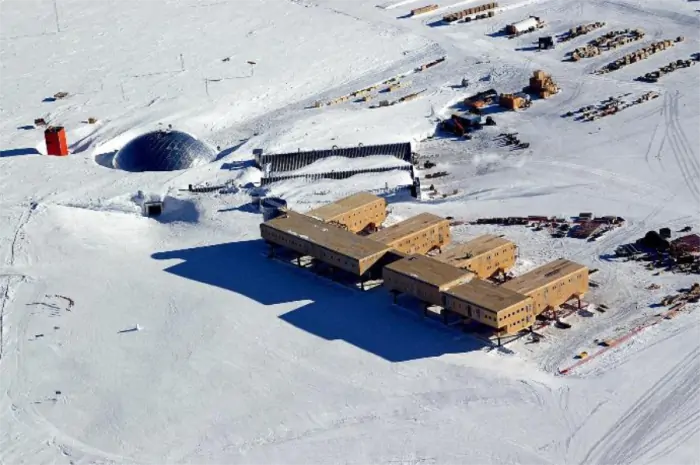
Amundsen-Scott South Pole Station | The Architecture of Survival
Proving technology at the absolute limits of the habitable world.
Project Snapshot
- Location: 90° South Latitude, Antarctica
- Architect: Ferraro Choi And Associates
- Climate Profile: Extreme Cold (-73°C / -100°F), Severe Wind Loads
- Core Technology: Suspended Film High-Performance Glazing
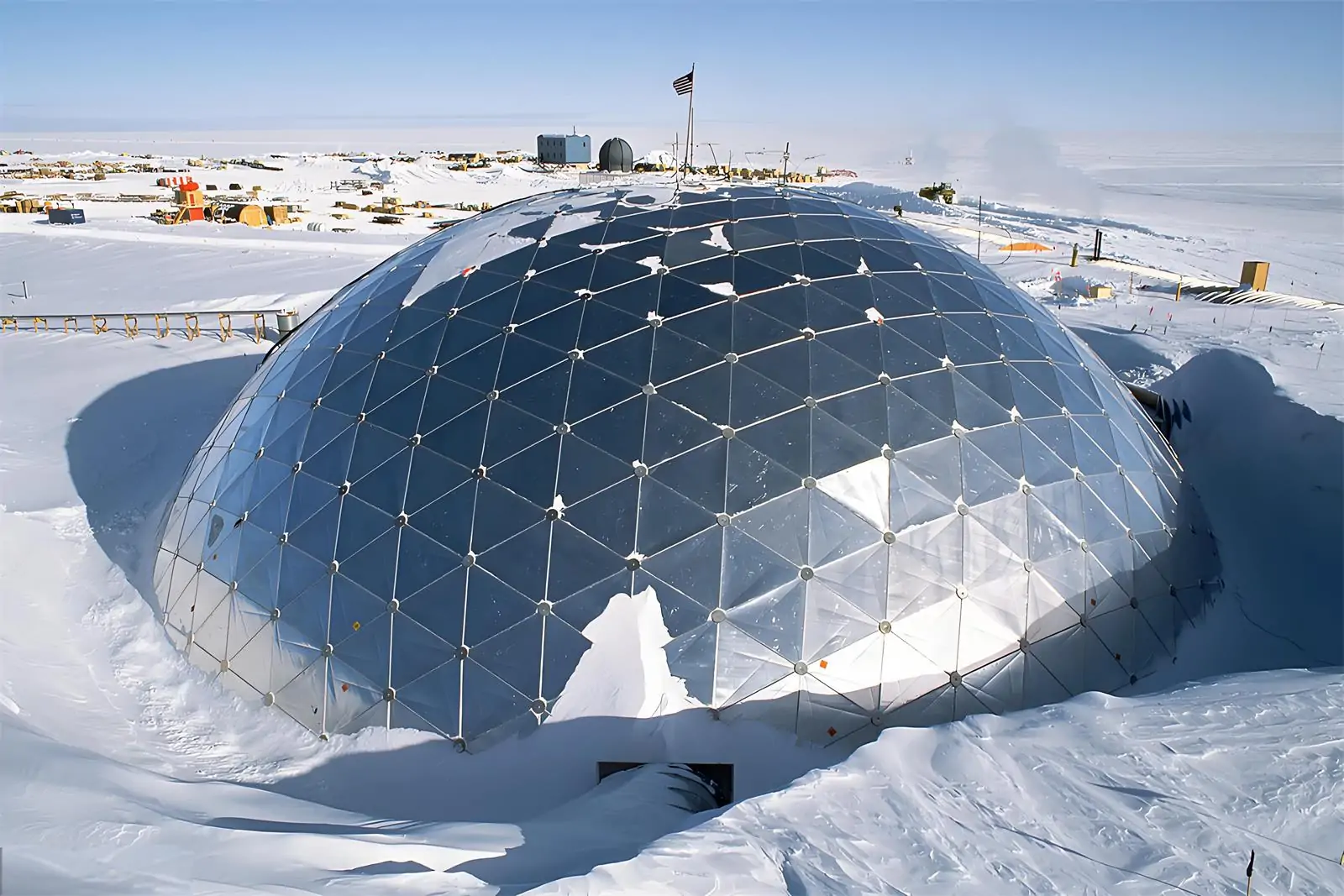
The Challenge | Building at the Apex of Extremes
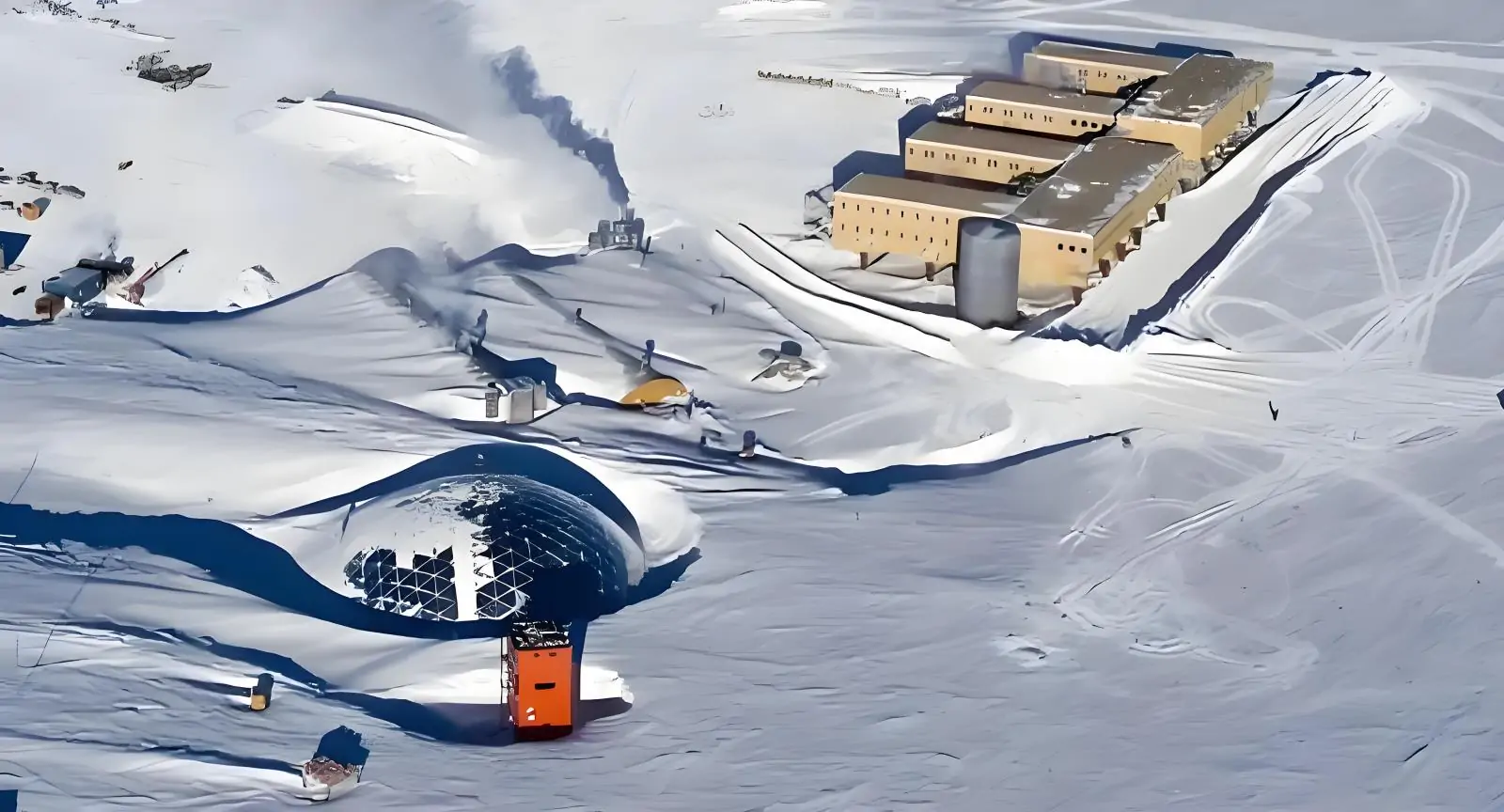
Building at the geographical South Pole represents the ultimate architectural difficulty. The Amundsen-Scott Station is not merely a research facility; it is a life-support system located in a frozen desert where winter temperatures plummet to a lethal -73°C.
The design team faced three critical imperatives:
The Energy Imperative:
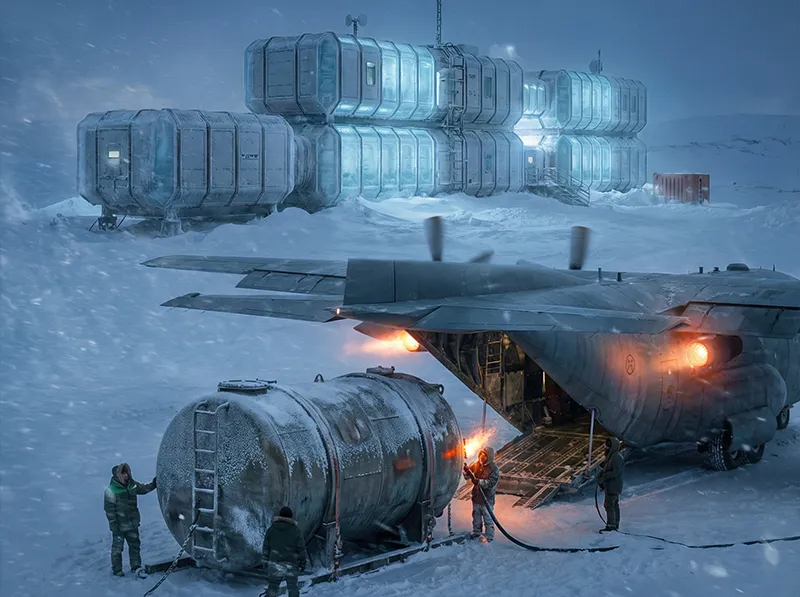
With heating fuel requiring expensive air transport, the building envelope had to be virtually airtight. Every joule of heat loss represented a logistical failure
The Moisture Paradox:
In extreme cold, standard insulating glass instantly freezes, becoming an opaque block of ice that causes severe internal moisture damage.
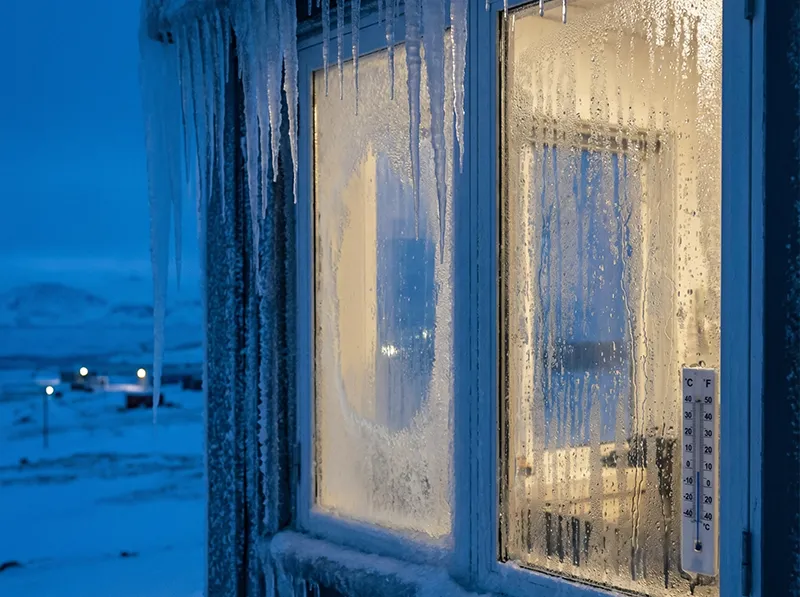
The Moisture Paradox:
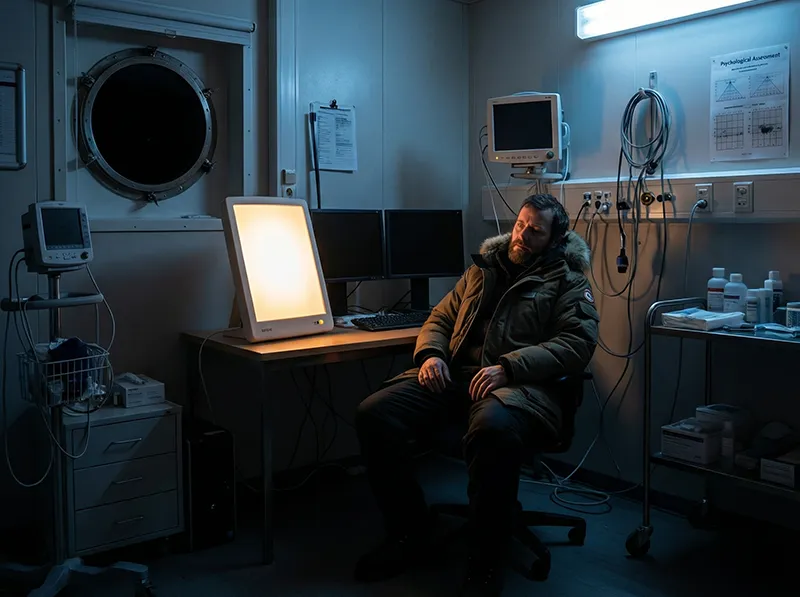
For researchers isolated for months in total darkness, a visual connection to the outside world is not a luxury—it is a medical necessity to combat Seasonal Affective Disorder.
The Solution | A Transparent Thermal Wall
To conquer these elements, the station utilized multi-cavity suspended film technology —the same engineering DNA found in UltraSlim systems. The windows function less like traditional glass and more like transparent, insulated walls.
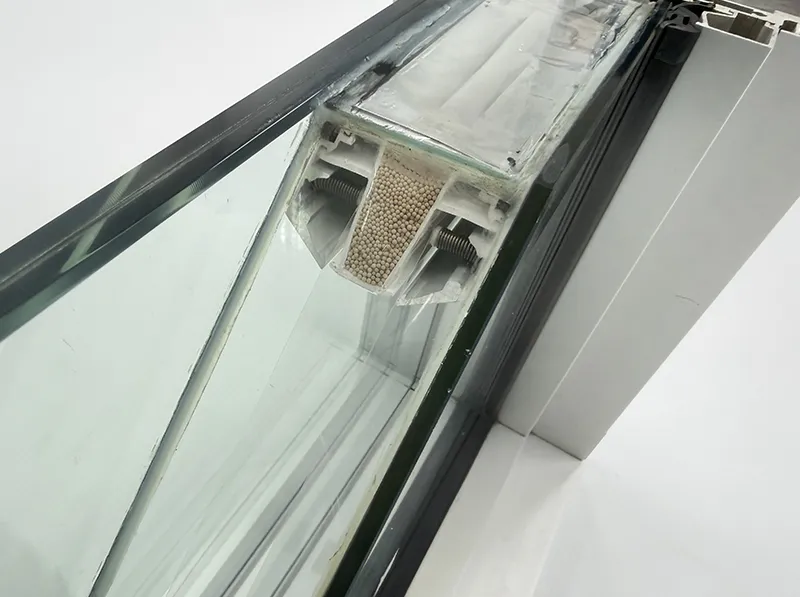
Insulation at Wall Values:
By suspending specialized films between the glass panes, the system creates multiple insulating chambers. This dramatically slows heat transfer, achieving insulation values previously thought impossible for glazing.
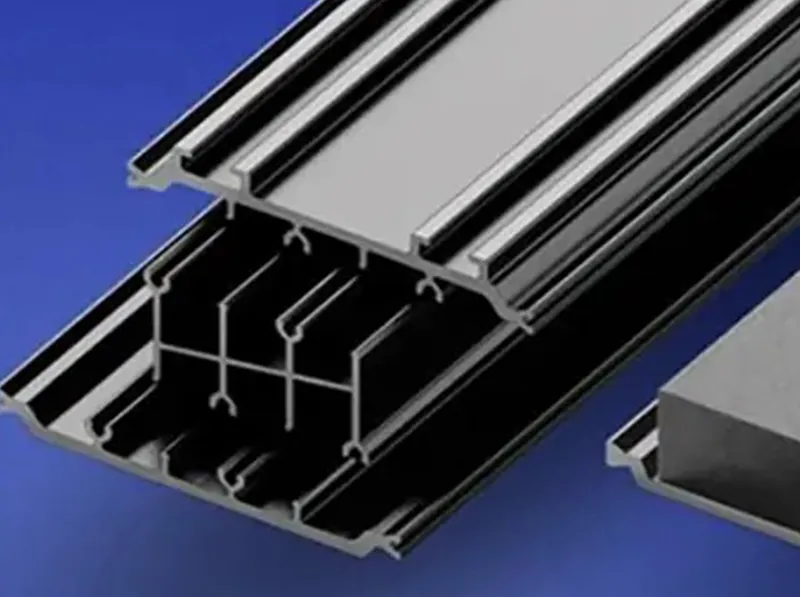
Absolute Optical Continuity:
The superior thermal break ensures the interior glass surface remains warm to the touch. This prevents condensation and frost buildup, ensuring crystal-clear views even when a blizzard rages outside.
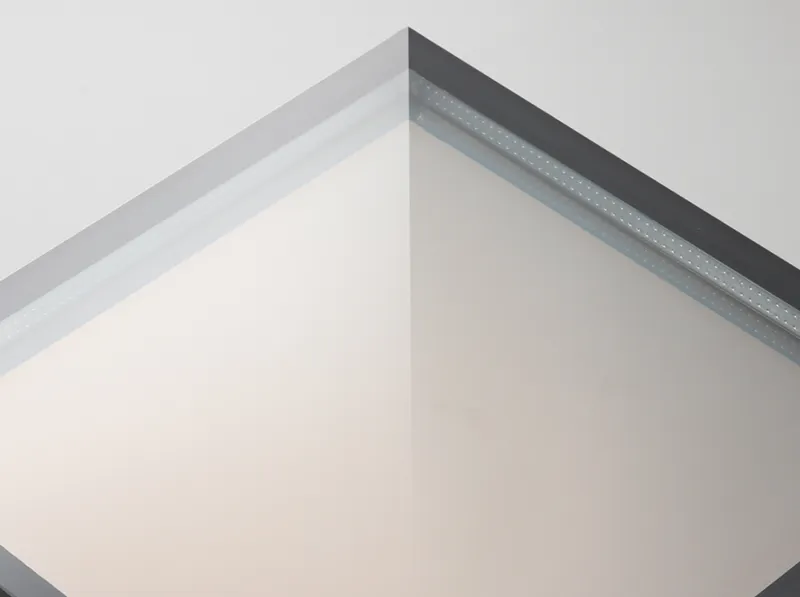
Structural Resilience:
The glazing system was engineered to withstand not just the cold, but the relentless Antarctic wind loads and drifting snow, maintaining structural integrity year after year.
The Result | Sanctuary at -73°C
The Amundsen-Scott Station stands as a monument to engineering resilience.
The most telling proof of performance is found in the station’s galley. Here, researchers dine in shirt-sleeve comfort, watching the Aurora Australis dance across the ice sheet. Just inches away, the glass holds back an environment cold enough to freeze jet fuel. It is a stark duality: absolute protection on one side, absolute wilderness on the other.
Proven at the Extremes
The South Pole serves as the ultimate stress test for our technology.
By sustaining human comfort in the harshest environment on Earth, we validated a simple truth: Performance scales. If this system can prevent heat loss at 90° South, it ensures effortless efficiency and comfort in your living room, regardless of the season.
- Previous: None
- Next: Ordos Ejin Horo Airport | The Crystalline Yurta